
Anatomy teaching
Anatomy Models vs Digital Anatomy Tables: Which Fits Your Curriculum?
SIMUTEC Team
Physical anatomy models and digital anatomy tables each have strengths. Learn how they differ, when to use each, and how many institutions combine them.
Short answer
Physical anatomy models give learners a tactile, three-dimensional reference they can hold, take apart and use anywhere. Digital anatomy tables let learners explore layered anatomy on a large screen, remove structures virtually and review cross-sections. Most medical and nursing programmes benefit from both: models for everyday classroom and practical work, and a digital table for whole-body, layered exploration.
Where physical anatomy models excel
• Hands-on identification: learners handle bones, joints and organs, such as the GD/A11103 disarticulated skeleton
• Small-group teaching: several models can be shared across tables at once
• Regional focus: joint models such as the shoulder, knee and hip series (GD/A11201) keep attention on one region
• Durability and portability: models can move between classrooms and exam stations
Where digital anatomy tables excel
Digital anatomy tables, such as those from Digihuman, display whole-body anatomy that learners can rotate, slice and peel back layer by layer. They suit lecture-style demonstrations, revision of complex regions and programmes that want to connect anatomy with medical imaging.
A practical way to combine them
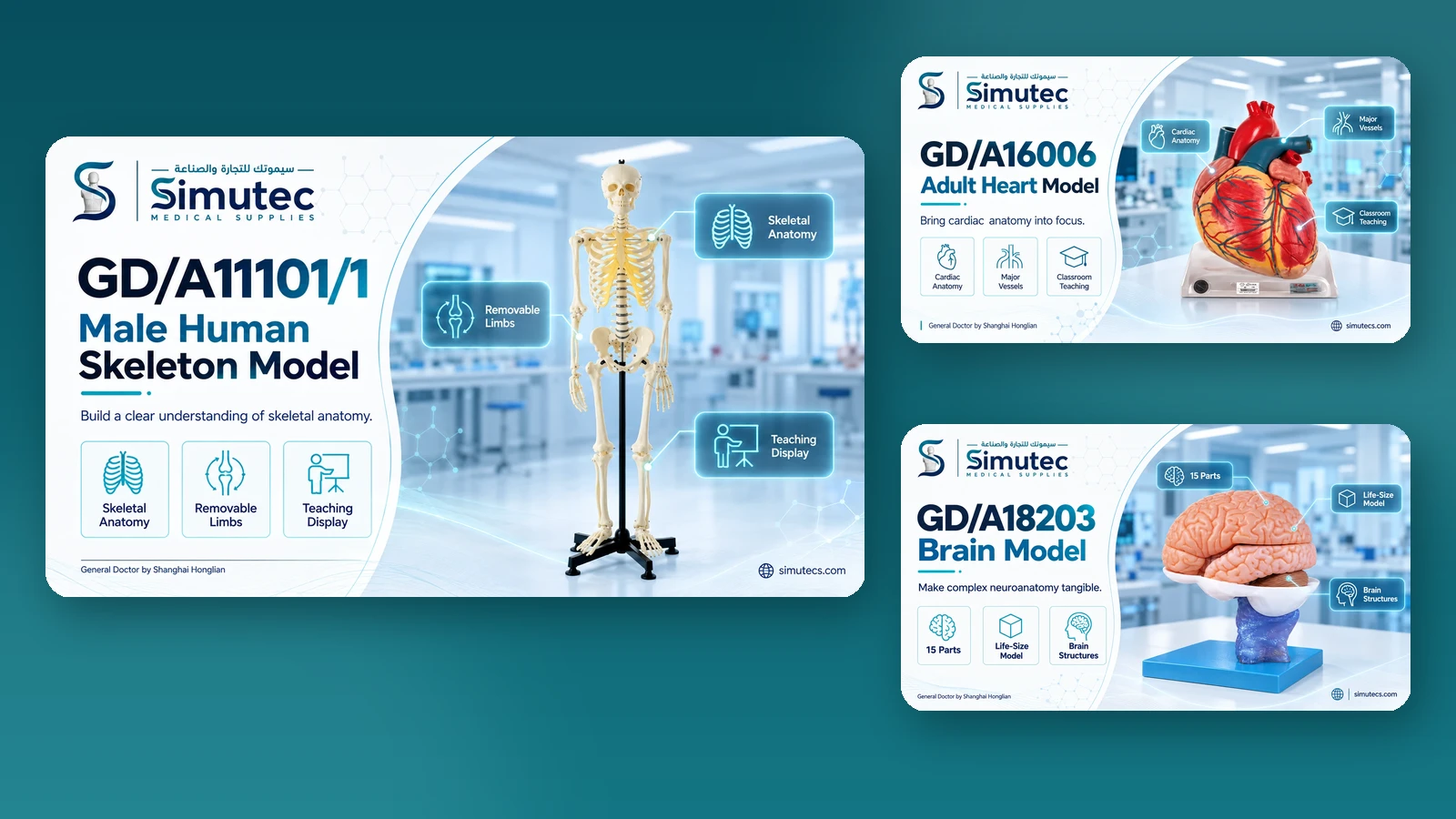
Introduce a system on the digital table, then move learners to physical models for identification practice. For example, explore the thorax digitally, then work in small groups with a 20-part dual-sex torso (GD/A10002), an adult heart model (GD/A16006) and a larynx, heart and lung model (GD/A13012).
A starter set of anatomy models
• Skeletons: GD/A11101/1 male skeleton and GD/A11103 disarticulated skeleton
• Torso: GD/A10002 20-part dual-sex torso
• Organs: heart, brain, liver, kidney and digestive system models
• Head: GD/A18212 head and neck model and colour-coded skulls
• Limbs: arm and leg muscle models with vessels and nerves
Building an anatomy teaching space?
Tell us your courses and cohort size and we will suggest a mix of models and digital systems.
Frequently asked questions
Do digital anatomy tables replace anatomy models?
No. They work best together. Digital tables add layered, whole-body exploration, while physical models give tactile, small-group practice.
Which anatomy models should a nursing school buy first?
A full skeleton, a dual-sex torso and a heart model cover many introductory lessons. Add organ, joint and pelvis models as courses develop.
Does SIMUTEC supply both?
Yes. SIMUTEC supplies General Doctor anatomy models and Digihuman digital anatomy systems.